Recent Highlights

Get e-mail updates when this information changes.

District Attorney David W. Paulson Retires Today - December 30, 2010

David W. Paulson, a 34-year career prosecutor, joined the Solano County DA’s office in 1977 and worked as a Deputy in the Vallejo office.  He was appointed Chief Deputy in 1983 and acting District Attorney on January 5, 1993.  Following a statewide recruitment, Paulson was appointed Solano County’s 26th District Attorney by a unanimous vote of the Board of Supervisors on March 9, 1993.  He then won election in 1994 and was re-elected, without opposition, in 1998.  He again won re-election in 2002 and was elected to a fourth term, again without opposition, in 2006.  He is retiring on December 30, 2010 after almost 34 years of service, including 18 years as Solano County District Attorney.  His tenure as DA is the second longest among all who have held the office since California statehood in 1850.

Paulson is also a retired Captain (O-6) in the U.S. Naval Reserve, completing 30 years of commissioned service in 2001.  His more significant duties included one year as a military trial judge in the Southwest Judicial Circuit in San Diego and four years as an appellate military judge on the Navy’s highest court, the Navy-Marine Corps Court of Criminal Appeals in Washington, D.C.  He was also assigned as the senior attorney and staff judge advocate for Readiness Command Region 20 (northern California, Nevada, Utah, Colorado, and Hawaii).  During his career, he earned the Legion of Merit, the Navy Commendation Medal, the Meritorious Service Medal, and numerous other awards.

Paulson served his fellow prosecutors and California law enforcement as president of the California District Attorneys Association from 2004-2005 and as president of the Institute for the Advancement of Criminal Justice from 2005-2006.  He had earlier served on the Board of Directors of the California District Attorneys Association.  In 2004 Paulson led the statewide campaign to defeat Proposition 66 and preserve California’s 3-strikes law.  Since 2005 he has also served as Governor Schwarzenegger’s appointee on the State Advisory Committee on Juvenile Justice and Delinquency Prevention and as the District Attorney representative on the state’s Prison Crimes Council.  He was also the chair of the Board of Advisors for the Chapman University School of Law LL.M. in Prosecutorial Science program and served as Editor-in-Chief of the first three issues of the Journal of the Institute for the Advancement of Criminal Justice.

He points out, “Over the years, I have provided leadership throughout the criminal justice system – working with the Sheriff and Chiefs of Police, county departments, state and federal law enforcement agencies, the Department of Corrections, the Attorney General, and other DAs around the state and nation to solve problems as well as to initiate measures that improved the administration of justice.”

Paulson noted several significant accomplishments during his tenure as Solano County District Attorney.  Among these are the following:

    - Established the District Attorney’s Bureau of Forensic Services, a state-of-the-art forensic laboratory in the County’s Fairfield campus – this Bureau has undertaken all forensic services that were previously performed by a contract vendor, resulting in a considerable cost savings to the taxpayers as well as saving substantial time.

    - Created the District Attorney’s Cold Case unit within the Bureau of Investigations – the county’s only team focused exclusively on investigating unsolved homicides and other violent crimes.

    - Instituted numerous programs to better serve victims and their families, including specialized units that prosecute homicides, gangs, career criminals, prison crimes, narcotics, family violence, child abduction, high-tech crimes, welfare fraud, insurance fraud, real estate fraud, and auto theft.

    - Established a Consumer Fraud and Environmental Crimes unit that is a recognized  statewide leader in protecting California’s citizens as well as its environment.

    - Established a Bad Check Restitution Program that has returned almost $2.6 million to local merchants – at no cost to taxpayers.

    - Created a Misdemeanor Diversion program to deal with first-time offenders, diverting them out of the criminal justice system and mandating education classes to reduce their likelihood of reoffending.

    - Helped create the North Bay High Tech Task Force (now called the Northern California Computer Crimes Task Force) in cooperation with the District Attorneys from Marin, Sonoma, Napa, and Contra Costa counties.

    - Established the Rainbow Children’s Center in both Vacaville and Vallejo – although the Centers’ Visitations Plus Program that helped families with issues of child custody and visitation has recently closed due to budget constraints, the Rainbow Center continues to actively assist law enforcement agencies throughout the county by offering a Multi-Disciplinary Interview Center for child victims of crime.

    - Wrote or edited several protocols that assist law enforcement in the investigation of serious and violent crimes.

    - Actively participated in law enforcement, collaborative, and community groups, including the Vacaville Police Department’s FIRST Program, the Children’s Network, the Children’s Alliance, the Child Abuse Prevention Council, Friday Night Live, Vallejo’s Fighting Back Partnership, Rio Vista’s Citizen Awareness Team, and the Chambers of Commerce in Fairfield-Suisun, Vacaville, and Vallejo.

    - Helped design and implement Solano County’s adult and juvenile Drug Courts.

    - Created and personally maintained the District Attorney’s web site, www.solanocounty.com/da, as a resource for Solano County residents and others to learn about the office and important issues regarding the criminal justice system.

    - Prior to its becoming a separate department of Child Support Services, significantly improved the level of assistance to Solano County families and children by increasing Family Support collections to over $32 million in its last year as a division of the DA’s office, more than triple the amount collected in 1992.

    - Led and managed the largest law office with the most diverse professional workforce in Solano County.

DA Paulson thanked and praised the hard work and dedication of his staff.  “I am very proud of our many accomplishments over the past eighteen years,” he said.  I am confident that the hard-working employees of the District Attorney’s Office will continue to seek and do justice, reduce crime, serve victims, and improve the quality of life in Solano County.”


DA Dave Paulson recognized for fighting child abuse
(Excerpts from the October 24, 2010 article / Daily Republic, Fairfield)

The ninth annual Child Abuse Prevention Awards Ceremony will be held on Thursday, October 28, 2010.  The event celebrates the accomplishments of Solano citizens who have helped to protect children from abuse and neglect.  This year’s honorees include individuals from the courts, education, business, government, law enforcement, Child Protective Services, nursing, the clergy and a journalist.  Tony Intintoli, former mayor of Vallejo and Children’s Network board member, will serve as master of ceremonies.

Award Recipients include:  Career Achievement Award - David Paulson, District Attorney


Solano DA to retire, won't seek fifth term
(Excerpts from the January 15, 2010 article by Brian Hamlin / The Reporter, Vacaville)

Solano County District Attorney David Paulson, who has served as the county's top lawman for 17 years, announced Thursday that he will not seek re-election to a fifth term.

Paulson, 62, notified his staff and the Solano County Law Enforcement Administrators' Association the same day.

"Several months ago, probably close to a year, I decided not to run and retire at the end of this term in December 2010."

Paulson, a former U.S. Navy captain and 1972 Boston University School of Law graduate, started work as a Solano County deputy district attorney in 1977. After his appointment to district attorney in 1993, he was elected four times from 1994 to 2006.

When he began considering retirement, Paulson said he anticipated supporting Chief Deputy District Attorney John Ellis as a possible successor in the upcoming election. Ellis, however, recently was appointed to a Superior Court judgeship by Gov. Arnold Schwarzenegger.

Since Ellis' judicial appointment, no other names have emerged as potential front-runners in the election. At least two veteran deputy district attorneys have indicated an interest in running for the post, but neither has made an official announcement.

Paulson said serving as district attorney has been a rewarding experience but, in recent years, also a frustrating one due to budgetary cutbacks and personnel layoffs.

"We've had a loss of programs that we've spent years building up and developing," Paulson said.

He noted that the office's Family Violence Unit is gone and the DA's overall staff has dwindled from 161 to 128 over the past year.

Some specialized units, Paulson said, have been saved, including the cold case and auto theft units, the latter financed primarily through the state Department of Motor Vehicles.

The county also has retained its just-opened crime lab, an independent, high-security forensic facility that will eventually handle a broad variety of evidence from all of the county's law enforcement agencies.

"The lab was one of the high points of the year," said Paulson, pointing out that the new lab will enable Solano County lawmen to have prompt, local analysis of evidence without the expense and delay of sending it out to a neighboring county.

The longtime district attorney doesn't plan to be a seldom-seen lame duck until his term runs out.

"Obviously there are still 11 months left in the year," he added. "There's still a lot to do."


Fairfield Gang Injunction

Solano County District Attorney David Paulson, in cooperation with the Fairfield Police Department, has obtained a preliminary civil injunction against the Norteño criminal street gang in the city of Fairfield. The injunction, issued by the Solano County Superior Court on July 24, 2009, prohibits certain public nuisance activity by gang members within a Safety Zone. The District Attorney has established an administrative process by which individuals named in the civil gang injunction may petition to "opt out" from the court ordered provisions.

Read more here.

DA supports production of new documentary,
Binge Drinking: The Rite of Passage

Solano County District Attorney David W. Paulson is proud to have worked with Dee Alarcon, Solano County Office of Education Superintendent, and Steve Padilla, Manager of Youth Development and Prevention Education Services, to produce a new documentary video entitled Binge Drinking: The Rite of Passage.

Binge drinking by high school and college students has taken a terrible toll on otherwise very talented youth. Therefore, the District Attorney was eager to help in this latest production. Moreover, the Sheriff and all of the Solano County Chiefs of Police joined him in supporting this new video.

The aim of this documentary is to help educate teens and their parents about the dangers of underage consumption of alcohol and about the particular dangers of binge drinking. If it helps even one individual or family, it will have been well worth the funding and the effort to produce it!

District Attorney Paulson has seen all too often a lack of informed judgment on the part of both teens and their parents when it comes to alcohol. Well meaning, but uninformed, parents make the mistake of believing that their children will drink anyway, so it's better for the parents to supply the alcohol. This has led to kegger parties with the parents' full knowledge...often ending in tragedy or even the death of one of the children attending the party.

The bottom line is that alcohol is an adult beverage - not for children - and that it should only be used in moderation. District Attorney Paulson has observed that "common sense isn't so common anymore," and this seems to fit the issue of underage and binge drinking. Hopefully, educating teens and their parents will help prevent injuries and/or death both to the kids and to others!

  Watch Trailer (2 minutes)

Watch Full Video (30 minutes)

(Note: This video is best viewed in Windows Media Player.)

For more information about binge and underage drinking or to obtain a copy of Binge Drinking: The Rite of Passage please contact the Solano County Office of Education by calling (707) 399-4400 or by visiting their website at Solano County Office of Education


Solano County breaks ground on the new District Attorney Forensic Laboratory


On Thursday, May 29, 2008, Solano County District Attorney David W. Paulson participated in the ground breaking ceremony for the new county building that will be the site of his new forensic laboratory. Scheduled to be completed in late 2009 and located in Fairfield, the new lab will provide a wide range of forensic services that are currently being contracted out to the Contra Costa County Sheriff's Crime Lab in Martinez.

When the facility opens, phase one services will include analysis of blood, breath and urine for the presence of alcohol and/or drugs as well as the analysis of substances that are believed to contain narcotics or other controlled substances. Phase two and phase three services, scheduled for subsequent years, will eventually include DNA testing and ballistics and trace evidence analysis as well as a detached two car garage equipped with pneumatic lifts to facilitate a thorough forensic analysis of vehicles used in crimes.


DA's Protecting Our Kids Program Now Offers FREE Software

Solano County District Attorney David W. Paulson created the Protecting Our Kids program to help parents and other concerned adults safeguard the Internet activities of young people. Protecting Our Kids gives parents and other adults in charge of supervising children's online computer activities the tools needed to protect kids from online predators and prevent them from engaging in Internet crime.

By understanding how to avoid the dangers of the Internet and how to take control of the family computer, parents can successfully keep criminal predators out of their homes and out of their children's lives. They can also learn how to prevent their children from using the Internet to break the law.

Please take time to view all of the sections on the
Protecting Our Kids Web site. You can learn "How Bad is the Problem", "What Can I Do?", what "Parental Controls" are available, your children's rights under the "Childrens Online Privacy Act", how to access statewide and national databases pursuant to "Megan's Law", how to help your kids take the "Honest Surfer Pledge", view "Links" to other resources, and how you can obtain the "ComputerCOP" software.

Please click
here to download an informational brochure on Protecting Our Kids.
Click Here To Order ComputerCOP Software

ComputerCOP software provides a quick, easy way for parents to determine what their children are doing while on the computer and to assess their kids' exposure to objectionable or even dangerous material. By inserting the mini-CD, ComputerCOP instantly scans for potentially objectionable images and text - drawing on its database of nearly 1,000 red-flagged words and phrases associated with pornography, drugs, violence, hate crimes, and gambling. ComputerCOP even scans files that have been deleted.

For more information about ComputerCOP, please click on the link in the column at left.

Get the ComputerCOP Software FREE:
Solano County residents can obtain the ComputerCOP software FREE.

- Just send a self addressed stamped envelope (SASE) to:

ComputerCOP Software
Solano County District Attorney's Office
675 Texas Street, Suite 4500
Fairfield, CA 94533-6340


  Check 21 Update:

The following is an article by Chuck Jaffe, a senior MarketWatch columnist. MarketWatch is a trademark of Dow Jones.

Goodbye Check Float - As old checking rules fall, so should bad checkbook habits

It may be a good thing that more kids are using debit cards these days, because most parents couldn't teach them about managing a checking account.
The problem is not so much that most adults fail to balance their checkbook -- although they do. It's that the rules involving checks keep changing. The latest change went into effect last week, and it pretty much ends the concept of "float" that many consumers grew up with. Technically speaking, float is the dollar value of cash balances created by the time lag in processing unpaid checks. For most consumers who grew up before the technological advances of the last decade, float was the time between when you could write a check, and when the debt would hit your account.

Yes, consumers are supposed to have the funds in hand so that their checks clear, but people living paycheck to paycheck, or simply trying to match the in-flows and out-flows, could be in a situation where checks clear much faster than they expect.
The last big change in this direction came in 2004, with a rule known as "Check 21" for the Check Clearing Act for the 21st Century, and which was designed to make the check-payment system more efficient by making it easier for banks to process checks electronically. With more than 35 billion paper checks being written each year, Check 21 made it so that the physical checks did not have to be moved from one bank to the next.

For many banking customers, the real impact of Check 21 was felt in the statement, where they stopped getting canceled checks returned and instead received "substitute checks" that amount to a picture -- usually smaller than an actual check -- of the written document. The next step in the evolution towards a cashless society -- or at least one without checks -- came with the implementation of something called the "accounts receivable conversion." This system made it so that if you pay a bill by check, the recipient can convert it into an electronic payment; the check does not necessarily show up in the next monthly statement, replaced by an entry showing the amount and the debit.

All of which leads to the latest change, one virtually ignored by the media, that retailers were able to start implementing Friday.
It's called "back office conversion," and it's similar to the accounts receivable method, except it now can apply to paying by check in person at a store. In the past, stores would accept checks, take them into the back office (hence the name) and make a daily trip to the bank (or use a courier service) to get them cleared. Now, the checks can be converted in the back office into electronic payments.

"It is not an instantaneous payment," says Paul M. Connolly, first vice president and chief operating officer for the Federal Reserve Bank of Boston, "but your payment will reach the bank during the day or at day's end, and certainly overnight."

Translation: Goodbye float. No more making a purchase on Saturday by check, and expecting that the check will not clear before Monday or Tuesday at the earliest.

Patterns Changing

As with the previous changes to checks used to pay bills, consumers will get a record of the check on their bank statement and they can get a copy of the check that will have legal standing if it needs to be used for tax or other purposes.
The original check is likely to be destroyed after 30 or 60 days. (Many checks already are incinerated or shredded in this fashion, but there is no change in the rules that financial institutions must keep a clear representation of your check for seven years.)

Connolly believes consumers aren't hearing much about back-office conversion because it doesn't alter consumer behavior; it simply impacts their ever-shrinking ability to play the float. Moreover, retailers will decide just how widespread the change is; given the cost and time savings most retailers would expect from the change, Connolly figures that many retailers, especially the big ones, will make the move.

The good news for consumers is that no one expects them to pay additional fees for writing checks, at least not yet. If anything, by reducing the cost and effort for a retailer it may encourage more of them to accept checks; all of the previous reduction in float times have been shown to reduce the number of checks written against insufficient funds, a very real benefit to both sides of any transaction.

Check-writing patterns have been changing in recent years, with consumers becoming much more accepting of debit and credit cards, online payment systems, electronic bank access and more. Connolly thinks that trend may be helped along by back-office conversion.

"If I go into the same store once a week every week of my life and I start to notice that those checks never come back to me, and that they clear almost as soon as I write them, maybe after some months or years I will say 'Why am I writing this check,'" Connolly says. "Maybe this will bring some consumers to the conclusion that a lot of people have already reached, that their debit or credit card does the job just as well -- or better -- than their traditional check." Anyone who has used the float as a form of short-term financing should instead be looking for overdraft protection or should curtail spending and step away from the edge of a financial precipice to avoid the heavy fees banks now charge for rubber checks.

"Float has definitely been in retreat, and this will push that process along a little further," says Connolly. "It was always risky, but now people should know that they just can't count on any real float time at all."


DISTRICT ATTORNEYS UNVEIL DUI AWARENESS CAMPAIGN "Make it Home for the Holidays":

Solano County District Attorney David W. Paulson recently announced that he and other DAs, in cooperation with the California District Attorneys Association (CDAA), have unveiled a statewide prosecutors' campaign to combat a rising tide of arrests and accidents resulting from driving under the influence of alcohol or drugs.

"Make it Home for the Holidays" is the theme of the campaign. According to CDAA Executive Director Dave LaBahn, "this effort to focus attention on driving under the influence is the first in the nation to be coordinated by a statewide prosecutors' association."

According to Gerald Shea, San Luis Obispo District Attorney and president of CDAA, "never before has there been a coordinated effort by prosecutors throughout California, or any state, to reduce the number of DUI arrests and DUI related fatalities."

Paulson noted, "this campaign is being spurred by statistics showing that while DUI arrests and accidents are declining in other states, they are increasing in California." In 2005 alone, there were 1,719 alcohol related fatalities in California.

As a result of their "Make it Home for the Holidays" campaign, District Attorneys hope to significantly reduce the number of DUI cases and fatalities during this holiday season and in 2007.

Please click
here to view the "Make it Home for the Holidays" campaign poster.

You can also click
here to view a chart showing the increase in DUI fatalities from 1998 through 2005.


District Attorney's Office is located in the New County Government Center

The District Attorney's Fairfield office is now located in the Solano County Government Center.

The address is:

Solano County District Attorney's Office
675 Texas Street, Suite 4500
Fairfield, CA 94533-6340


The telephone number is:

(707) 784-6800
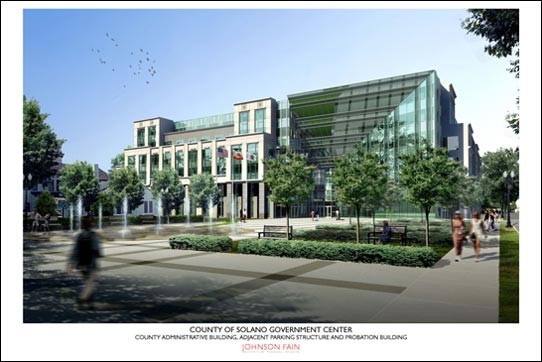


For a brief history of Solano County courthouses and other government offices, please see the informative article by Sabene Goerke-Shrode, A Complex History, published in the Vacaville Reporter on December 12, 2004.


New Program Helps Prevent Identity Theft

Green Valley Mortgage, in cooperation with the District Attorney's office, recently launched Green Valley Mortgage Credit Watch to help Solano County residents avoid becoming the victims of identity theft.

Law enforcement professionals and other experts agree that periodically reviewing your credit report is the best way to determine if you are a victim of identity theft. To help combat the growing menace of identity theft, Green Valley Mortgage has created a new FREE service called Credit Watch. Members of Green Valley Mortgage Credit Watch will receive up to three free credit reports per year. Credit Watch members will also periodically receive information on the latest identity theft scams.

A Solano County-based mortgage brokerage, Green Valley Mortgage offers these confidential services at NO COST. Credit Watch is a community service, offered FREE to Solano County residents. Credit Watch members need not be customers of, nor are members in any way obligated to purchase any other services from, Green Valley Mortgage. For more information, click
here or call 707-646-2070.


You Can Also Obtain A FREE Credit Report From AnnualCreditReport.com

The Fair and Accurate Credit Transactions Act (FACTA), approved by Congress in December 2003, led to the creation of the AnnualCreditReport.com website. Now, consumers may visit that website at any time to obtain an annual credit report from each of the three credit reporting services - Experian, Equifax, and Trans Union.

It is recommended that consumers review the information from each bureau, but not at the same time. For example, one might obtain a report from one source in April, from a second source in July, and from the third source in October. You can expect each of the three national services to ask a couple of verification questions, just to be certain who is requesting the information. The verification questions could only be correctly answered by a particular consumer.

The annual credit reports do not provide your FICO risk score or any generic risk score models, but they will show the most current information the bureaus have on file. The consumer may dispute anything on their credit reports by writing the three national credit services. They must verify the information contained in their files within 30 days. If the information is correct, the services will notify the consumer that their credit report will not be changed. If the information is found to be inaccurate, the service will notify the consumer of the appropriate deletions. In such case, the disputed data will be suppressed in any future credit report. For more information, please visit
AnnualCreditReport.com.

You can also obtain free credit reports by calling AnnualCreditReport.com toll free at 877-322-8228 or by sending a request to AnnualCreditReport, PO Box 105281, Atlanta, GA 30348-5281.

CONSUMER WARNING:

You may have heard or seen advertisements offering a "FREE" credit report from a website known as FreeCreditReport.com. This site offers credit services, including a "free" report, but it is important to recognize that this is not a free service but rather a for-profit business.

Please note the following WARNING from the California Attorney General's Office:
The FreeCreditReport.com website is owned by Experian, and they are attempting to sell you services, such as providing you with a credit score, beyond your free report. The law does not require that credit bureaus give you a credit score, just the report. Consumers should be careful about all web sites that offer a "free report." We have settled two lawsuits against credit repair companies that advertise this way, and which then mislead consumers into paying for other services they did not know about or agree to. The only legitimate site to get a free report is www.AnnualCreditReport.com.

The Federal Trade Commission has also published a WARNING:
Some sites claim to offer "free" credit reports, but they may charge you for another product if you accept a "free" report. There is only one authorized online source for you to get a free credit report under federal law - AnnualCreditReport.com. For more information, visit
ftc.gov.


How To Stop Getting Those Annoying Credit Card Applications

Consumers are entitled to contact each or all of the major credit bureaus and request them to stop sending you credit card solicitations and related offers. For more information, call 888-5OPTOUT (567-8688).


One Example of a Current Identity Theft Scam

A new identity theft scam is being perpetrated on unsuspecting victims. In this scam, the would-be thief calls the residence or office number of the victim and identifies him/herself as an officer or employee of the local court. The scammer announces to the victim, that he/she has failed to report for jury duty, and that a bench warrant was issued against them for their arrest. The victim's reaction is, understandably, one of shock and surprise which places them at an immediate disadvantage and much more susceptible to the scam. The victim will rightly deny knowledge of any such claim; that no jury duty notification was ever received.

The scammer then shifts into high gear, reassuring the victim of the possibility this is all "just a misunderstanding" or "some sort of clerical error" that can be straightened out on the phone. He/she tells the victim that all they need to do is "verify" their information with a few simple questions. Any reluctance on the victim's part, and the scammer will again threaten that the failure to provide the information will result in an immediate execution of the arrest warrant. The scammer obtains names, social security numbers, dates of birth, and will solicit credit card or bank account numbers claiming these will be used by their credit bureau to "verify" the victim's identity. Family members who receive these calls are especially vulnerable to coercion. Threats against the victim's career, should he/she be arrested and now have a criminal record, are frightening and persuasive.

Be alert to this threat to your personal information and identity. Legitimate court employees will never call to solicit information. Instead, courts would send any official notification by standard mail delivery. Any person receiving calls such as those described above should record the scammer's phone number (if Caller ID is available) and immediately report the contact to law enforcement officials.


Other Highlights

The District Attorney's Child Abduction Unit enforces hundreds of child custody orders issued by the family law courts. Since inception, the Unit has recovered over 750 children who were either abducted or illegally detained by a non-custodial parent. During 2006, the Unit's Criminal Investigators initiated 148 cases and successfully recovered 55 children. Returns from other states included Nevada, Colorado, Texas, New Mexico, Georgia, Mississippi, and Oregon. The Unit also assisted Napa County in recovering two children in Mexico and worked with the FBI to recover three other children who were returned from Mexico to Texas.

During 2006, the District Attorney's Consumer and Environmental Protection Unit successfully concluded several enforcement actions during the past year, with recovery of costs, penalties, and fees totaling more than $1.2 million.

The Unit also continues to actively prosecute cases involving violations of Proposition 65, the Safe Drinking Water and Toxic Enforcement Act passed by California voters in 1986. Prop 65 requires a business of 10 or more employees to give a clear and reasonable warning to the public of exposure to a chemical known to cause cancer or reproductive toxicity. Although the law allows enforcement actions to be brought by the Attorney General or District Attorney, private parties are also given authority to enforce Prop 65 in the public interest, but only if the private party first provides written notice of a violation to the alleged violator, the Attorney General, and every District Attorney in whose jurisdiction the alleged violation occurs. If no public prosecutors commence enforcement within sixty days, then the private party may sue. Of note, the Solano County District Attorney's office is one of only a few prosecutors' offices that makes Prop 65 enforcement a priority area of enforcement.

The District Attorney's Auto Theft Task Unit continues to investigate and prosecute vehicle theft. Over the past year, the unit has recovered 51 stolen vehicles. Additionally, the unit participated in bait car operations throughout the county (resulting in 19 arrests) and a cooperative vehicle theft suppression enforcement effort in the larger cities (resulting in 39 arrests and recovery of 7 stolen vehicles). The highlight for 2006 was the unit's acquisition of automated license place recognition (ALPR) equipment. Using a specially equipped undercover vehicle, the unit can scan license plates on moving or parked vehicles and instantaneously run the plates through a stolen vehicle database. In the first four months of use, ALPR has led to the recovery of 5 stolen vehicles and 11 stolen license plates. Significantly, due in large measure to the efforts of the Task Force, the recovery rate for vehicles stolen in Solano County during fiscal year 2005-2006 was over 92%.

The District Attorney's Office, along with other agencies, helped create and now staffs the new Juvenile Drug Court, which has been operating for almost three years. The Juvenile Drug Court program currently has between 12-18 participants at any given time. Key to the success of this program is that drug counseling is provided to the family as well as to the minor. The District Attorney's Office is also working with the Court, Probation, and Public Defender to expand the criteria for admission into the Juvenile Drug Court program and to extend its benefits to young persons living in Vallejo and Benicia.

The District Attorney's Subpoena Service Unit processed almost 36,000 subpoenas in 2005 and more than 40,000 subpoenas in 2006 with a "served" rate of better than 99%. This Unit's work not only alleviates the burden of subpoena service from the local law enforcement agencies but has resulted in substantially fewer continuances since virtually every subpoenaed witness has been served.

The District Attorney's Discovery Unit, established in the fall of 2005, makes copies of documents, photographs, audio and video tapes, and other materials as part of the prosecution's duty to provide discovery to defendants and their counsel prior to trial. During 2006, the Discovery Unit met this responsibility by making discovery in over 2400 cases. This Unit's work also alleviates the burden on local law enforcement agencies of having to comply with discovery requests and court orders.

The District Attorneys of Solano, Marin, Sonoma, Napa, and Contra Costa Counties, along with several other northern California counties continue to operate the Northern California Computer Crime Task Force (NC3TF). This multi-jurisdictional unit is one of five such collaboratives in the state to receive funding from the Governor's Office of Criminal Justice Planning. A Deputy DA from Solano County serves as the task force lead prosecutor.

The District Attorney's Rainbow Children's Centers in Vacaville and Vallejo continue to operate a multi-disciplinary interview center (MDIC) for children who are victims of sexual assault. Since inception, the MDIC has interviewed over 1100 child victims.

The Centers also operate the Visitations Plus Program, providing safe exchange and supervised visitation services to children and their families. Since inception, this program has conducted more than 6400 supervised exchanges, more than 3500 supervised visits, and served over 4000 children and over 5600 parents.

Since its inception, the District Attorney's Bad Check Restitution Program has pursued over 50,000 bad checks and has recovered and returned to Solano County merchants more than $1.9 million in restitution without impact upon or cost to law enforcement agencies, courts, or taxpayers. Bringing the Program in-house has been extremely successful. In the first year, the number of merchant clients served by the Program more than doubled. Both restitution to merchants and program revenue have also steadily increased. In fact, the amount of restitution paid out during 2006 - over $211,000 - was the highest since the Program was first established in 1993.

The District Attorney's Fraud Prosecution Unit is continuing its outreach to the business and insurance communities in order to alert them to possible Workers' Compensation Insurance fraud as well as staged accidents and other types of possible Automobile Insurance fraud. These efforts include the production of an instructional video on workers' compensation fraud which will be made available to law enforcement and businesses.

The District Attorney's Real Estate Fraud Unit has been extremely busy during its first year in operation. In fact, this unit is seeing the most significant increase in reported crime. Funded by a nominal filing fee on all real estate transactions, the Unit investigates and prosecutes real estate fraud and cases involving suspected elder financial abuse.

The District Attorney and the City of Fairfield entered into a partnership last summer to establish a model Community Prosecutor pilot program that would be the first of its kind in Solano County. The objective of the Community Prosecutor program is to enhance prosecutions, reduce crime, and increase community safety. The assigned Deputy DA works closely with the City's police, fire, code enforcement, and other departments to target offenders and seek proper abatement and imposition of penalties along with cost recovery. In just a few months, the community prosecutor has already filed several cases to meet the objectives of this program.

Friday Night Live, in cooperation with the District Attorney's office, recently produced an instructional video for law enforcement regarding alcohol and drug use by teenagers.

The District Attorney continues as an active participant in the Proposition 36 Court.

The District Attorney's office operates an in-house continuing legal education program that partially satisfies California State Bar training requirements without additional cost to county.

The District Attorney's Office no longer has the Family Support Division after July 1, 2002. It is now the Solano County Department of Child Support Services. However, while that division was part of the office and under the direction of District Attorney David Paulson, annual collections of child support increased from just over $10 million in 1992 to over $35 million in 2002.